Website Worth

Total Pageviews

Friday

Funding sources

Countries. Alphabetical order

Canada

International Development Research Centre, Ottawa, Canada
http://web.idrc.ca/en/ev-1-201-1-DO_TOPIC.html
IDRC is a public corporation created by the Parliament of Canada to help developing countries use science and technology to find practical, long-term solutions to the social, economic, and environmental problems they face. IDRC funds research activities that are designed to provide direct benefits to developing countries and their citizens.

Germany
Alexander von Humboldt Foundation
http://www.humboldt-foundation.de/en/
The Alexander von Humboldt Foundation (AvH) aims at strengthening regional and interdisciplinary networking between the scientists and scholars sponsored by the foundation, at supporting worldwide contacts and at introducing young scientists to the work of the Humboldt Foundation and to research in Germany. The program each year enables 500 young highly qualified scholars resident outside Germany who hold doctorates to carry out research projects of their own choice in Germany (age limit: 40 years).
Submission Deadline: Anytime

German Academic Exchange Service
http://www.daad.de/en/index.html
Deutscher Akademischer Austausch Dienst supports and promotes all areas relating to science, research, language, teaching and very much more. The 200 and more programmes range from short-term exchanges for research or teaching purposes through to doctoral scholarships lasting several years for graduates from developing countries, from information visits by delegations of foreign university vicechancellors through to the long-term regional programmes conceived to establish efficient higher education systems in the Third World.

Gottlieb Daimler- and Karl Benz-Foundation
http://www.daimler-benz-stiftung.de/home/fellowship/en/start.html
The purpose of Gottlieb Daimler- and Karl Benz-Foundation is to promote science and research focussed on the interrelationship between humanity, environment and technology, and particularly to support interdisciplinary approaches to these issues.

Heinrich Böll Foundation
http://www.boell.de/asp/frameset_en.html
The Heinrich Böll Foundation, is a legally autonomous and intellectually open political foundation. Its foremost task is political education in Germany and abroad with the aim of promoting informed democratic opinion, socio-political commitment and mutual understanding.

Rosa Luxemburg Foundation
http://www.rosalux.de/engl/home.htm
The Rosa-Luxemburg Foundation is particularly active in adult and youth political educational in the Federal Republic of Germany and has developed into a nationwide institution in this field. The Foundation has, the possiblity to offer financial assistance to advanced students, post-graduates and scholars from other countries.

Volkswagen Foundation
http://www.volkswagenstiftung.de/english.html
The Volkswagen Foundation provides financial support for academic research in all fields in Germany as well as other countries. The main thrust is to stimulate new interdisciplinary developments, to help create highly qualified research capacities, and to establish novel path-breaking fields of research.
Submission Deadline: Anytime

Greece

Alexander S. Onassis Public Benefit Foundation
Foreigners' Fellowship Programme
http://www.onassis.gr
Annual programme of research grants and educational scholarships which is addressed to non Greeks, full members of National Academies, University Professors of all levels (PhD holders), postdoctoral researchers, post-graduate students and PhD candidates.

Israel

Israel Academy of Sciences and Humanities
http://www.academy.ac.il/
A major role of the Israel Academy is to promote and coordinate scholarly contacts between Israel and the international community, partly on the basis of international agreements for scientific cooperation, and partly by representing Israel in international scientific organizations. The Academy is the signatory to over thirty international agreements providing for reciprocal visits by Israeli and foreign scholars and joint scientific workshops.
Submission Deadline: Anytime
Israel Science Foundation
http://www.isf.org.il
The Israel Science Foundation (ISF) is Israel's major research funding organization. Set up by the Israel Academy of Sciences and Humanities, the ISF supports academic research in all fields.
Japan

Asahi Glass Foundation
http://www.af-info.or.jp/eng/subsidy/grant.html
The Asahi Glass Foundation supports research in leading-edge scientific and technological fields and recognizes individual and organizational efforts to solve issues of concern to people around the world. Human and social sciences research assistance is awarded for projects that endeavour to find solutions to serious problems that have arisen as a result of rapid social change.

Canon Foundation in Europe
http://www.canonfoundation.org/pages/main.htm
The Canon Foundation in Europe is a philanthropic, grant-making institution, active in the promotion of international cultural and scientific relations between Europe and Japan. Annually, it grants up to 15 fellowships to young, highly qualified, Master's or Doctor's degree European and Japanese researchers, not older than 40 years. The fellowships are awarded regardless of disciplines and existing employment positions.

Toshiba International Foundation
http://www.toshiba.co.jp/about/tifo/english/doc05/index.htm
The Foundation strives to contribute to the development of international understanding by promoting exchange activities, including the organization and sponsorship of symposia and seminars that further worldwide understanding of Japan. The Foundation also participates in programs designed to support development of international communities.

Toyota Foundation
http://www.toyotafound.or.jp/e_guide/eken.htm
The Toyota Foundation is a grant-making organization dedicated to the goals of realizing greater human fulfilment and contributing to the development of a human-oriented society. In general grants are awarded to individuals or to individuals on behalf of a group, and not to organizations. Activities supported may include individual or group research projects, conferences or public seminars, publications, or other modalities.

Nehterlands

International Institute for Asian Studies
http://www.iias.nl/iias/fellowships.html
The International Institute for Asian Studies (IIAS) is a postdoctoral research centre. Its main objective is to encourage the study of Asia and to promote national and international cooperation in this field. The institute focuses on the humanities and the social sciences and, where relevant, on their interaction with other sciences.

The Netherlands Fellowship Programmes (NFP)
http://www.nuffic.nl/nfp/
The Netherlands Fellowship Programmes (NFP) are demand-oriented fellowship programmes designed to foster institutional development. The overall aim of the NFP is to help alleviate qualitative and quantitative shortages of skilled manpower and to do so within the framework of sustainable capacity-building directed towards reducing poverty in developing countries.
Available to nationals of 57 selected countries.
The NFP offers fellowships for master's degree programmes, for PhD studies, for short courses, tailor-made training, refresher courses.

Portugal

Fundação para a Ciência e Tecnologia
http://www.fct.mces.pt/
Financial support for post-doctoral fellowships in Portugal is available to all citizens of the European Union.
Spain

Fundación Caja Madrid
http://www.fundacioncajamadrid.org/Fundacion/fun_inicio
La Fundación Caja Madrid mantiene un amplio Programa de Becas, para licenciados y titulados superiores en España, destinadas a la ampliación de estudios de postgrado en el extranjero en economía, sociología, ciencias políticas, derecho político y constitucional.

Fundación Carolina
http://www.fundacioncarolina.es/
La Fundación Carolina, con sede en la Agencia Española de Cooperación Internacional, ofrece un programa de becas dirigidas a jóvenes titulados superiores, profesionales e investigadores de los países que integran la Comunidad Iberoamericana de Naciones.

Jaume Bofill Foundation
http://www.fbofill.org/
The Jaume Bofill Foundation is concerned with promoting initiatives conducive to achieving a better understanding of society in Catalonia (Spain). Supports research projects in social sciences falling within its general program.

Fundación La Caixa
http://www.estudis.lacaixa.comunicacions.com/webes/estudis.nsf/wurl/bqbshomecos_esp
It offers post-graduate scholarships for young Spanish graduate students in universities and research centres in Europe and USA.

Ministerio de Asuntos Exteriores
http://www.becasmae.es/
El Ministerio de Asuntos Exteriores y de Cooperación de España y la Agencia Española de Cooperación Internacional, ofrecen becas para extranjeros para estudios de postgrado en universidades y centros superiores públicos y privados en España.

Ministerio de Educación y Ciencia
http://wwwn.mec.es/univ/
1- Programa de becas postdoctorales en España y extranjero, para la realización de trabajos de investigación.
2- Becas predoctorales y postdoctorales en universidades y centros de investigación de Estados Unidos.

Switzerland

Swiss Foundation for Research in Social Sciences
http://www.fors.unil.ch
The Swiss Foundation for Research in Social Sciences FORS was created in accordance to the law on research of the Federal Government. Its purpose is to provide services, to conduct research and to publish and disseminate research findings in the social sciences. The Foundation's activities specifically comprise the following:
- preparing, documenting and providing data of all kinds, such as are needed to conduct studies in the social sciences;
- advising researchers and other interested parties on the collection and use of data;
- developing methods and procedures for collecting and analysing data;
- promoting the application of the findings obtained.

World Society Foundation
http://www.uzh.ch/wsf/
The World Society Foundation is designed to encourage and support research on world society-its structure, historical development, and current transformation. Research proposals eligible for grants should focus on the various processes of social integration within world-wide systems (world culture, world economy, world politics and intergovernmental systems). These processes and their consequences may be studied from different levels of analysis, focusing on units such as individuals, sub-national regions, nations, transnational social networks etc.

United Kingdom

Aga Khan Foundation
http://www.akdn.org/
The mission of the Aga Khan Foundation is to develop and promote creative solutions to problems that impede social development, primarily in Asia and East Africa. It provides a limited number of scholarships each year for postgraduate studies.

Economic and Social Research Council
http://www.esrc.ac.uk/index.asp
The Economic and Social Research Council (ESRC) is the UK's leading research funding and training agency addressing economic and social concerns. It aims to provide high quality research on issues of importance to business, the public sector and government. The issues considered include economic competitiveness, the effectiveness of public services and policy, and quality of life. The Small Grants Scheme is part of the ESRC e-Social Science Initiative. The scheme aims to encourage applications that are particularly novel or experimental, or based around the theme of social shaping or the socio?economic impact of e-science. See the ESRC website for details, guidance notes and an application form.

Leverhulme Trust
http://www.leverhulme.org.uk/grants_awards/
The Leverhulme Trust makes awards for the support of research and education. The Trust emphasises individuals and encompasses all subject areas; its financial support is organised into grants and awards which vary in size, purpose and application procedure.

Newton International Fellowship
http://www.newtonfellowships.org/
Are you at the beginning of your research career - with the potential to be world-class?
Is your research in the natural or social sciences, engineering or humanities?
Do you want to build and maintain links with leading researchers in the UK?
Then apply now for a Newton International Fellowship

USA

Center for Advanced Holocaust Studies
http://www.ushmm.org/research/center/fellowship/
The Center awards fellowships to support significant research and writing about the Holocaust. Awards are granted on a competitive basis. The Center welcomes proposals from scholars in all relevant disciplines including history, political science, literature, Jewish studies, philosophy, religion, psychology, comparative genocide studies, law and others.

Coca-Cola Foundation, Inc.
http://www2.coca-cola.com/citizenship/foundation_coke.html
Primary support for education including higher education, science and engineering. Funds organizations outside the US that promote higher education. Guidelines and application form are posted on the foundation's web site.

Earhart Foundation
The Fellowship Research Grants Program is open to individuals who have established themselves professionally and who are affiliated with educational or research institutions. Areas of interest include economics, the environment, social and economic policy. Individuals or organizations interested in this foundation should submit a letter requesting the application guidelines.
The Earhart Foundation, David Kennedy, President, 2200 Green Road, Suite H, Ann Arbor, Michigan 48105, USA

Ford Foundation
http://www.fordfound.org/
Asset Building and Community Management Program: Grant making aims to help low-income people and communities build the financial, human, social and natural resource assets they need to overcome poverty and injustice. Categories are Economic Development and Work-Force Development: Support given to organizations that help improve the ways low-income people develop marketable job skills and acquire and retain reliable employment that provides livable wages
Community & Resource Development Program: Environment and Development sub-program gives grants helping people and groups acquire, protect and improve land, water, forests, wildlife and other natural assets in ways that help reduce poverty and injustice.
Applications are considered throughout the year.

Harry Frank Guggenheim Foundation
http://www.hfg.org/rg/guidelines.htm
The Harry Frank Guggenheim Foundation places a priority on the study of urgent problems of violence and aggression in the modern world and also encourages related research projects in neuroscience, genetics, animal behaviour, the social sciences, history, criminology, and the humanities which illuminate modern human problems. In addition to the program of support for postdoctoral research, ten or more dissertation fellowships are awarded each year to individuals who will complete the writing of the dissertation within the award year

Horowitz Foundation for Social Policy
http://www.horowitz-foundation.org/
Research grants in the social sciences

Grantlink
http://www.grantlink.org/
GrantLink is a comprehensive source of information on grant support for social science and public policy researches. GrantLink covers all social science and public policy disciplines, including but not necessarily limited to, anthropology, business, economics, demography, geography, health sciences, history, international affairs, law, management and decision sciences, political science, psychology, public administration, public finance, sociology, and statistics.

J. Paul Getty Trust
http://www.getty.edu/grants/research/scholars/index.html
The Getty Research Institute is dedicated to advanced scholarship in the arts and humanities. It offers public programs and a residential program for international scholars and provides non residential grants to support scholars throughout the world

John Simon Guggenheim Memorial Foundation
http://www.gf.org/
The John Simon Guggenheim Foundation offers Fellowships to further the development of scholars and artists by assisting them to engage in research in any field of knowledge and creation in any of the arts, except the performing arts, under the freest possible conditions and irrespective of race, colour, or creed. Fellowships are not available for students. Fellowships are awarded through two annual competitions: one open to citizens and permanent residents of the United States and Canada, and the other open to citizens and permanent residents of Latin America and the Caribbean.

Lindbergh Foundation
http://www.lindberghfoundation.org
Yearly, the Lindbergh Foundation provides grants to men and women whose individual initiative and work in a wide spectrum of disciplines furthers the vision of a balance between the advance of technology and the preservation of the natural/human environment. Application guidelines and procedures are posted on the foundation's website.

National Endowment for Democracy
http://www.ned.org/
The National Endowment for Democracy is a private, nonprofit organization created to strengthen democratic institutions around the world through nongovernmental efforts. It makes hundreds of grants each year to support prodemocracy groups in Africa, Asia, Central and Eastern Europe, Eurasia, Latin America, and the Middle East.

RGK Foundation
http://www.rgkfoundation.org
The foundation commits funding worldwide to support medical research, educational research and community development. In these areas, the foundation supports programs and conferences that promote academic excellence in universities and colleges that raise literacy levels and that support the health and well being of children.

Russel Sage Foundation
http://www.russellsage.org/
The Russel Sage Foundation is the principal American Foundation devoted exclusively to research in the social sciences. Located in New York City, it is a research center, a funding source for studies by scholars at other academic and research institutions, and an active member of the nation's social science community. The foundation also publishes, under its own inprint, the books that derive from the work of its grantees and Visiting Scholars.

Social Science Research Council
http://www.ssrc.org
Founded in 1923, the Social Science Research Council (SSRC) is an independent non-profit organization with ongoing research projects on every continent, most of which are designed to encourage innovation and to help social scientists engage broader constituencies. Fellowship and dissertation funding opportunities available.

Spencer Foundation
http://www.spencer.org/programs/index.htm
The Foundation's research programs provide funding for investigations that promise to yield new knowledge about education in the United States or abroad. Research projects vary widely, ranging from medium-sized studies that can be completed within a year by an individual researcher to more extensive collaborative studies that last several years.

William T. Grant Foundation
http://wtgrantfoundation.org
The William T. Grant Foundation works to improve the lives of young people by investing in high quality research on how contexts such as family and programs affect youth, how these contexts can be improved, and how scientific evidence affects influential adults. Major grants are available for research encompassing: evaluations (of systems, policies, etc ), policy analysis, communication , capacity building
Submission Deadline: Anytime

Woodrow Wilson International Center for Scholars
http://www.wilsoncenter.org/fellowships
The Center offers residential Fellowships in the Social Sciences and Humanities for the entire U.S. academic year (September through May), or for a minimum of four months during the academic year, to individuals in the social sciences and humanities who submit outstanding project proposals on a broad range of national and/or international issues. Fellows are selected through a multi-level peer review process. Proposed topics should intersect with questions of public policy or provide the historical and/or cultural framework to illumine policy issues of contemporary importance.

Funding sources

Countries. Alphabetical order

Canada

International Development Research Centre, Ottawa, Canada
http://web.idrc.ca/en/ev-1-201-1-DO_TOPIC.html
IDRC is a public corporation created by the Parliament of Canada to help developing countries use science and technology to find practical, long-term solutions to the social, economic, and environmental problems they face. IDRC funds research activities that are designed to provide direct benefits to developing countries and their citizens.

Germany
Alexander von Humboldt Foundation
http://www.humboldt-foundation.de/en/
The Alexander von Humboldt Foundation (AvH) aims at strengthening regional and interdisciplinary networking between the scientists and scholars sponsored by the foundation, at supporting worldwide contacts and at introducing young scientists to the work of the Humboldt Foundation and to research in Germany. The program each year enables 500 young highly qualified scholars resident outside Germany who hold doctorates to carry out research projects of their own choice in Germany (age limit: 40 years).
Submission Deadline: Anytime

German Academic Exchange Service
http://www.daad.de/en/index.html
Deutscher Akademischer Austausch Dienst supports and promotes all areas relating to science, research, language, teaching and very much more. The 200 and more programmes range from short-term exchanges for research or teaching purposes through to doctoral scholarships lasting several years for graduates from developing countries, from information visits by delegations of foreign university vicechancellors through to the long-term regional programmes conceived to establish efficient higher education systems in the Third World.

Gottlieb Daimler- and Karl Benz-Foundation
http://www.daimler-benz-stiftung.de/home/fellowship/en/start.html
The purpose of Gottlieb Daimler- and Karl Benz-Foundation is to promote science and research focussed on the interrelationship between humanity, environment and technology, and particularly to support interdisciplinary approaches to these issues.

Heinrich Böll Foundation
http://www.boell.de/asp/frameset_en.html
The Heinrich Böll Foundation, is a legally autonomous and intellectually open political foundation. Its foremost task is political education in Germany and abroad with the aim of promoting informed democratic opinion, socio-political commitment and mutual understanding.

Rosa Luxemburg Foundation
http://www.rosalux.de/engl/home.htm
The Rosa-Luxemburg Foundation is particularly active in adult and youth political educational in the Federal Republic of Germany and has developed into a nationwide institution in this field. The Foundation has, the possiblity to offer financial assistance to advanced students, post-graduates and scholars from other countries.

Volkswagen Foundation
http://www.volkswagenstiftung.de/english.html
The Volkswagen Foundation provides financial support for academic research in all fields in Germany as well as other countries. The main thrust is to stimulate new interdisciplinary developments, to help create highly qualified research capacities, and to establish novel path-breaking fields of research.
Submission Deadline: Anytime

Greece

Alexander S. Onassis Public Benefit Foundation
Foreigners' Fellowship Programme
http://www.onassis.gr
Annual programme of research grants and educational scholarships which is addressed to non Greeks, full members of National Academies, University Professors of all levels (PhD holders), postdoctoral researchers, post-graduate students and PhD candidates.

Israel

Israel Academy of Sciences and Humanities
http://www.academy.ac.il/
A major role of the Israel Academy is to promote and coordinate scholarly contacts between Israel and the international community, partly on the basis of international agreements for scientific cooperation, and partly by representing Israel in international scientific organizations. The Academy is the signatory to over thirty international agreements providing for reciprocal visits by Israeli and foreign scholars and joint scientific workshops.
Submission Deadline: Anytime
Israel Science Foundation
http://www.isf.org.il
The Israel Science Foundation (ISF) is Israel's major research funding organization. Set up by the Israel Academy of Sciences and Humanities, the ISF supports academic research in all fields.
Japan

Asahi Glass Foundation
http://www.af-info.or.jp/eng/subsidy/grant.html
The Asahi Glass Foundation supports research in leading-edge scientific and technological fields and recognizes individual and organizational efforts to solve issues of concern to people around the world. Human and social sciences research assistance is awarded for projects that endeavour to find solutions to serious problems that have arisen as a result of rapid social change.

Canon Foundation in Europe
http://www.canonfoundation.org/pages/main.htm
The Canon Foundation in Europe is a philanthropic, grant-making institution, active in the promotion of international cultural and scientific relations between Europe and Japan. Annually, it grants up to 15 fellowships to young, highly qualified, Master's or Doctor's degree European and Japanese researchers, not older than 40 years. The fellowships are awarded regardless of disciplines and existing employment positions.

Toshiba International Foundation
http://www.toshiba.co.jp/about/tifo/english/doc05/index.htm
The Foundation strives to contribute to the development of international understanding by promoting exchange activities, including the organization and sponsorship of symposia and seminars that further worldwide understanding of Japan. The Foundation also participates in programs designed to support development of international communities.

Toyota Foundation
http://www.toyotafound.or.jp/e_guide/eken.htm
The Toyota Foundation is a grant-making organization dedicated to the goals of realizing greater human fulfilment and contributing to the development of a human-oriented society. In general grants are awarded to individuals or to individuals on behalf of a group, and not to organizations. Activities supported may include individual or group research projects, conferences or public seminars, publications, or other modalities.

Nehterlands

International Institute for Asian Studies
http://www.iias.nl/iias/fellowships.html
The International Institute for Asian Studies (IIAS) is a postdoctoral research centre. Its main objective is to encourage the study of Asia and to promote national and international cooperation in this field. The institute focuses on the humanities and the social sciences and, where relevant, on their interaction with other sciences.

The Netherlands Fellowship Programmes (NFP)
http://www.nuffic.nl/nfp/
The Netherlands Fellowship Programmes (NFP) are demand-oriented fellowship programmes designed to foster institutional development. The overall aim of the NFP is to help alleviate qualitative and quantitative shortages of skilled manpower and to do so within the framework of sustainable capacity-building directed towards reducing poverty in developing countries.
Available to nationals of 57 selected countries.
The NFP offers fellowships for master's degree programmes, for PhD studies, for short courses, tailor-made training, refresher courses.

Portugal

Fundação para a Ciência e Tecnologia
http://www.fct.mces.pt/
Financial support for post-doctoral fellowships in Portugal is available to all citizens of the European Union.
Spain

Fundación Caja Madrid
http://www.fundacioncajamadrid.org/Fundacion/fun_inicio
La Fundación Caja Madrid mantiene un amplio Programa de Becas, para licenciados y titulados superiores en España, destinadas a la ampliación de estudios de postgrado en el extranjero en economía, sociología, ciencias políticas, derecho político y constitucional.

Fundación Carolina
http://www.fundacioncarolina.es/
La Fundación Carolina, con sede en la Agencia Española de Cooperación Internacional, ofrece un programa de becas dirigidas a jóvenes titulados superiores, profesionales e investigadores de los países que integran la Comunidad Iberoamericana de Naciones.

Jaume Bofill Foundation
http://www.fbofill.org/
The Jaume Bofill Foundation is concerned with promoting initiatives conducive to achieving a better understanding of society in Catalonia (Spain). Supports research projects in social sciences falling within its general program.

Fundación La Caixa
http://www.estudis.lacaixa.comunicacions.com/webes/estudis.nsf/wurl/bqbshomecos_esp
It offers post-graduate scholarships for young Spanish graduate students in universities and research centres in Europe and USA.

Ministerio de Asuntos Exteriores
http://www.becasmae.es/
El Ministerio de Asuntos Exteriores y de Cooperación de España y la Agencia Española de Cooperación Internacional, ofrecen becas para extranjeros para estudios de postgrado en universidades y centros superiores públicos y privados en España.

Ministerio de Educación y Ciencia
http://wwwn.mec.es/univ/
1- Programa de becas postdoctorales en España y extranjero, para la realización de trabajos de investigación.
2- Becas predoctorales y postdoctorales en universidades y centros de investigación de Estados Unidos.

Switzerland

Swiss Foundation for Research in Social Sciences
http://www.fors.unil.ch
The Swiss Foundation for Research in Social Sciences FORS was created in accordance to the law on research of the Federal Government. Its purpose is to provide services, to conduct research and to publish and disseminate research findings in the social sciences. The Foundation's activities specifically comprise the following:
- preparing, documenting and providing data of all kinds, such as are needed to conduct studies in the social sciences;
- advising researchers and other interested parties on the collection and use of data;
- developing methods and procedures for collecting and analysing data;
- promoting the application of the findings obtained.

World Society Foundation
http://www.uzh.ch/wsf/
The World Society Foundation is designed to encourage and support research on world society-its structure, historical development, and current transformation. Research proposals eligible for grants should focus on the various processes of social integration within world-wide systems (world culture, world economy, world politics and intergovernmental systems). These processes and their consequences may be studied from different levels of analysis, focusing on units such as individuals, sub-national regions, nations, transnational social networks etc.

United Kingdom

Aga Khan Foundation
http://www.akdn.org/
The mission of the Aga Khan Foundation is to develop and promote creative solutions to problems that impede social development, primarily in Asia and East Africa. It provides a limited number of scholarships each year for postgraduate studies.

Economic and Social Research Council
http://www.esrc.ac.uk/index.asp
The Economic and Social Research Council (ESRC) is the UK's leading research funding and training agency addressing economic and social concerns. It aims to provide high quality research on issues of importance to business, the public sector and government. The issues considered include economic competitiveness, the effectiveness of public services and policy, and quality of life. The Small Grants Scheme is part of the ESRC e-Social Science Initiative. The scheme aims to encourage applications that are particularly novel or experimental, or based around the theme of social shaping or the socio?economic impact of e-science. See the ESRC website for details, guidance notes and an application form.

Leverhulme Trust
http://www.leverhulme.org.uk/grants_awards/
The Leverhulme Trust makes awards for the support of research and education. The Trust emphasises individuals and encompasses all subject areas; its financial support is organised into grants and awards which vary in size, purpose and application procedure.

Newton International Fellowship
http://www.newtonfellowships.org/
Are you at the beginning of your research career - with the potential to be world-class?
Is your research in the natural or social sciences, engineering or humanities?
Do you want to build and maintain links with leading researchers in the UK?
Then apply now for a Newton International Fellowship

USA

Center for Advanced Holocaust Studies
http://www.ushmm.org/research/center/fellowship/
The Center awards fellowships to support significant research and writing about the Holocaust. Awards are granted on a competitive basis. The Center welcomes proposals from scholars in all relevant disciplines including history, political science, literature, Jewish studies, philosophy, religion, psychology, comparative genocide studies, law and others.

Coca-Cola Foundation, Inc.
http://www2.coca-cola.com/citizenship/foundation_coke.html
Primary support for education including higher education, science and engineering. Funds organizations outside the US that promote higher education. Guidelines and application form are posted on the foundation's web site.

Earhart Foundation
The Fellowship Research Grants Program is open to individuals who have established themselves professionally and who are affiliated with educational or research institutions. Areas of interest include economics, the environment, social and economic policy. Individuals or organizations interested in this foundation should submit a letter requesting the application guidelines.
The Earhart Foundation, David Kennedy, President, 2200 Green Road, Suite H, Ann Arbor, Michigan 48105, USA

Ford Foundation
http://www.fordfound.org/
Asset Building and Community Management Program: Grant making aims to help low-income people and communities build the financial, human, social and natural resource assets they need to overcome poverty and injustice. Categories are Economic Development and Work-Force Development: Support given to organizations that help improve the ways low-income people develop marketable job skills and acquire and retain reliable employment that provides livable wages
Community & Resource Development Program: Environment and Development sub-program gives grants helping people and groups acquire, protect and improve land, water, forests, wildlife and other natural assets in ways that help reduce poverty and injustice.
Applications are considered throughout the year.

Harry Frank Guggenheim Foundation
http://www.hfg.org/rg/guidelines.htm
The Harry Frank Guggenheim Foundation places a priority on the study of urgent problems of violence and aggression in the modern world and also encourages related research projects in neuroscience, genetics, animal behaviour, the social sciences, history, criminology, and the humanities which illuminate modern human problems. In addition to the program of support for postdoctoral research, ten or more dissertation fellowships are awarded each year to individuals who will complete the writing of the dissertation within the award year

Horowitz Foundation for Social Policy
http://www.horowitz-foundation.org/
Research grants in the social sciences

Grantlink
http://www.grantlink.org/
GrantLink is a comprehensive source of information on grant support for social science and public policy researches. GrantLink covers all social science and public policy disciplines, including but not necessarily limited to, anthropology, business, economics, demography, geography, health sciences, history, international affairs, law, management and decision sciences, political science, psychology, public administration, public finance, sociology, and statistics.

J. Paul Getty Trust
http://www.getty.edu/grants/research/scholars/index.html
The Getty Research Institute is dedicated to advanced scholarship in the arts and humanities. It offers public programs and a residential program for international scholars and provides non residential grants to support scholars throughout the world

John Simon Guggenheim Memorial Foundation
http://www.gf.org/
The John Simon Guggenheim Foundation offers Fellowships to further the development of scholars and artists by assisting them to engage in research in any field of knowledge and creation in any of the arts, except the performing arts, under the freest possible conditions and irrespective of race, colour, or creed. Fellowships are not available for students. Fellowships are awarded through two annual competitions: one open to citizens and permanent residents of the United States and Canada, and the other open to citizens and permanent residents of Latin America and the Caribbean.

Lindbergh Foundation
http://www.lindberghfoundation.org
Yearly, the Lindbergh Foundation provides grants to men and women whose individual initiative and work in a wide spectrum of disciplines furthers the vision of a balance between the advance of technology and the preservation of the natural/human environment. Application guidelines and procedures are posted on the foundation's website.

National Endowment for Democracy
http://www.ned.org/
The National Endowment for Democracy is a private, nonprofit organization created to strengthen democratic institutions around the world through nongovernmental efforts. It makes hundreds of grants each year to support prodemocracy groups in Africa, Asia, Central and Eastern Europe, Eurasia, Latin America, and the Middle East.

RGK Foundation
http://www.rgkfoundation.org
The foundation commits funding worldwide to support medical research, educational research and community development. In these areas, the foundation supports programs and conferences that promote academic excellence in universities and colleges that raise literacy levels and that support the health and well being of children.

Russel Sage Foundation
http://www.russellsage.org/
The Russel Sage Foundation is the principal American Foundation devoted exclusively to research in the social sciences. Located in New York City, it is a research center, a funding source for studies by scholars at other academic and research institutions, and an active member of the nation's social science community. The foundation also publishes, under its own inprint, the books that derive from the work of its grantees and Visiting Scholars.

Social Science Research Council
http://www.ssrc.org
Founded in 1923, the Social Science Research Council (SSRC) is an independent non-profit organization with ongoing research projects on every continent, most of which are designed to encourage innovation and to help social scientists engage broader constituencies. Fellowship and dissertation funding opportunities available.

Spencer Foundation
http://www.spencer.org/programs/index.htm
The Foundation's research programs provide funding for investigations that promise to yield new knowledge about education in the United States or abroad. Research projects vary widely, ranging from medium-sized studies that can be completed within a year by an individual researcher to more extensive collaborative studies that last several years.

William T. Grant Foundation
http://wtgrantfoundation.org
The William T. Grant Foundation works to improve the lives of young people by investing in high quality research on how contexts such as family and programs affect youth, how these contexts can be improved, and how scientific evidence affects influential adults. Major grants are available for research encompassing: evaluations (of systems, policies, etc ), policy analysis, communication , capacity building
Submission Deadline: Anytime

Woodrow Wilson International Center for Scholars
http://www.wilsoncenter.org/fellowships
The Center offers residential Fellowships in the Social Sciences and Humanities for the entire U.S. academic year (September through May), or for a minimum of four months during the academic year, to individuals in the social sciences and humanities who submit outstanding project proposals on a broad range of national and/or international issues. Fellows are selected through a multi-level peer review process. Proposed topics should intersect with questions of public policy or provide the historical and/or cultural framework to illumine policy issues of contemporary importance.

Wednesday

Survey Errors and Survey Costs

Survey Errors and Survey Costs

Copyright © 1989 John Wiley & Sons, Inc. All rights reserved.

Survey Errors and Survey Costs

Author(s): Robert M. Groves

Published Online: 28 JAN 2005

Print ISBN: 9780471611714

Online ISBN: 9780471725275

DOI: 10.1002/0471725277

Book Series: Wiley Series in Probability and Statistics

About this Book

The Wiley-Interscience Paperback Series consists of selected books that have been made more accessible to consumers in an effort to increase global appeal and general circulation. With these new unabridged softcover volumes, Wiley hopes to extend the lives of these works by making them available to future generations of statisticians, mathematicians, and scientists.

"Survey Errors and Survey Costs is a well-written, well-presented, and highly readable text that should be on every error-conscious statistician's bookshelf. Any courses that cover the theory and design of surveys should certainly have Survey Errors and Survey Costs on their reading lists."
-Phil Edwards
MEL, Aston University Science Park, UK
Review in The Statistician, Vol. 40, No. 3, 1991

"This volume is an extremely valuable contribution to survey methodology. It has many virtues: First, it provides a framework in which survey errors can be segregated by sources. Second, Groves has skillfully synthesized existing knowledge, bringing together in an easily accessible form empirical knowledge from a variety of sources. Third, he has managed to integrate into a common framework the contributions of several disciplines. For example, the work of psychometricians and cognitive psychologists is made relevant to the research of econometricians as well as the field experience of sociologists. Finally, but not least, Groves has managed to present all this in a style that is accessible to a wide variety of readers ranging from survey specialists to policymakers."
-Peter H. Rossi
University of Massachusetts at Amherst
Review in Journal of Official Statistics, January 1991

More about this book summary

Table of contents

Select All

    1. You have free access to this content

      Frontmatter (pages i–xxiii)

    2. You have full text access to this content

      An Introduction to Survey Errors (pages 1–47)

    3. You have full text access to this content

      An Introduction to Survey Costs (pages 49–80)

    4. You have full text access to this content

      Costs and Errors of Covering the Population (pages 81–132)

    5. You have full text access to this content

      Nonresponse in Sample Surveys (pages 133–183)

    6. You have full text access to this content

      Probing the Causes of Nonresponse and Efforts to Reduce Nonresponse (pages 185–238)

    7. You have full text access to this content

      Costs and Errors Arising from Sampling (pages 239–294)

    8. You have full text access to this content

      Empirical Estimation of Survey Measurement Error (pages 295–355)

    9. You have full text access to this content

      The Interviewer as a Source of Survey Measurement Error (pages 357–406)

    10. You have full text access to this content

      The Respondent as a Source of Survey Measurement Error (pages 407–448)

    11. You have full text access to this content

      Measurement Errors Associated with the Questionnaire (pages 449–499)

    12. You have full text access to this content

      Response Effects of the Mode of Data Collection (pages 501–552)

    13. You have free access to this content

      References (pages 553–579)

    14. You have free access to this content

      Index (pages 581–590)

Tuesday

LITERATURE ON NGO–STATE RELATIONS IN ASIA

(Kerkvliet 1995, Malarney 1996, Ma 2002, Hsu 2008, Marshall 2009, Gainsborough 2010, Heurlin 2010, Hsu 2010)

Gainsborough, M. (2010). "Present but not Powerful: Neoliberalism, the State, and Development in Vietnam." Globalizations 7(4): 475-488.

Through a case study of Vietnam, this paper explores what happens to neoliberal ideas about development when they encounter the very different political and cultural context of a developing country. The paper argues that although much scholarship tends implicitly or explicitly to emphasise the very great power of neoliberal institutions in our world today, an analysis of continuity and change in Vietnam during two decades of extensive engagement with neoliberal actors suggests that the influence of neoliberalism on the working of the Vietnamese state has been relatively small. The paper seeks both to document and explain this through an account which is attentive to both structure and agency and which in turn sheds new light on the nature of power in our world.

Heurlin, C. (2010). "Governing Civil Society: The Political Logic of NGO-State Relations Under Dictatorship." Voluntas: International Journal of Voluntary and Nonprofit Organizations 21(2): 220-239.

This paper attempts to take the first steps toward developing a theory of non-governmental organizations (NGO)-state relations under dictatorship. Drawing on evidence from East Asia, the author argues that dictatorships typically employ one of two strategies in attempting to govern NGOs. First, some dictatorships follow a corporatist strategy, in which business associations, development, and social welfare organizations are co-opted into the state and controlled through a variety of strategies. Second, other dictatorships pursue an exclusionary strategy in which NGOs are marginalized and replaced with state institutions. Variation in the strategy chosen may be explained by differing levels of elite competition and the type of development strategy. Single-party states tend to regulate elite conflicts better and thus often choose corporatist strategies. In personalist regimes dictators tend to fear the organizational and mobilizational potential of NGOs and thus tend to pursue exclusionary strategies. This choice, however, is conditioned by the development strategy employed, as socialist development strategies reduce the incentives to allow NGOs.

Hsu, C. (2010). "Beyond Civil Society: An Organizational Perspective on State–NGO Relations in the People's Republic of China." Journal of Civil Society 6(3): 259-277.

In the last two decades, the People's Republic of China has witnessed an explosion of NGOs. What will the implications be for state?society relations? This article, drawing upon research conducted at seven Chinese NGOs, critiques two approaches to analysing this problem: the civil society framework and the privatization perspective. It then proffers a third way: an approach based on organizational analysis. Both the civil society and privatization perspectives assume a zero-sum game between a monolithic state and NGOs/citizens. Yet empirical evidence reveals that Chinese NGOs are often much more interested in building alliances with state agencies and actors than in autonomy from the government. From an organizational perspective, this makes sense. As organizations, both NGOs and state agencies need to ensure a constant supply of necessary resources for the firm to survive, and their strategies for achieving this goal will be constrained by their actors' own institutional experiences and the cultural frameworks extant in their society. Alliances between Chinese NGOs and state agencies can help both types of organizations secure necessary resources and gain legitimacy.

Hsu, C. L. (2008). "‘Rehabilitating Charity’ in China: The Case of Project Hope and the Rise of Non-Profit Organizations." Journal of Civil Society 4(2): 81-96.

Beginning in the 1990s, the People's Republic of China has experienced explosive growth in the number of non-governmental organizations. This article examines one of the earliest and most influential Chinese NGOs, Project Hope, a charitable organization which solicits donations to help poor rural children stay in school. The success of Project Hope and the subsequent growth of the non-profit sector are surprising given that China arguably has no history of an organizational form like the Western donative-style charity. As such, this case offers a rare opportunity to examine the rise of a new organizational form. New institutionalist and social capital theoretical approaches will be used to analyse the social mechanisms underlying practice of donative-style charity. Chinese cultural practices of giving to the needy in the premodern era and under Mao Zedong's socialist state (1949?1978) will be explicated to reveal the resources and constraints emerging Chinese charities faced in the post-socialist era. This article focuses on one problem that China's first Western-style charities had to address: how to establish the practice of voluntary giving to non-governmental organizations. It examines two of Project Hope's strategies and their consequences: (1) blurring the distinction between charitable organizations and the state and (2) building personal relationships between donors and recipients.

Kerkvliet, B. J. T. (1995). "Village-State Relations in Vietnam: The Effect of Everyday Politics on Decollectivization." The Journal of Asian Studies 54(2): 396-418.

Why, since 1988, has the Vietnamese government reversed its commitment to collective farming and permitted the revival of family farming? BENEDICT KERKVLIET rejects the obvious explanation-that reversal followed naturally from the post-1986 policy of reform (d oi-moi) or that it merely mimicked Chinese policies. He proposes, as an alternative, that the Vietnamese government has responded with various kinds of accommodations since the mid-1970s to growing popular discontent with its agricultural policies. Borrowing a concept from Brantly Womack, Kerkvliet suggests that Communist parties must be "mass-regarding" both to establish their rule and to maintain it. He links this idea with James Scott's emphasis on the power of everyday peasant resistance to conclude that the Vietnamese Communist Party was responding to popular pressure from below. Thus, Kerkvliet finds that standard characterizations that represent the current regime in Vietnam as a "dominating state" or one that rules through "mobilization authoritarianism" overlook the existence of strong local social pressures that have the capacity for low-level resistance to government policy. Moreover, such characterizations also do not take into account that the Vietnamese state has displayed a long-term concern with ensuring that its policies are acceptable among the peasantry.

Ma, Q. (2002). "The Governance of NGOs in China since 1978: How Much Autonomy?" Nonprofit and Voluntary Sector Quarterly 31(3): 305-328.

Does the surge of nongovernmental organizations (NGOs) in China indicate a shift in power away from the party-state and the emergence of a civil society? In an attempt to shed light on the relationship between the state and the NGOs, this article examines the aims of official NGO policy and its influence on the growth patterns of NGOs. The discussion is divided into three sections. The first section analyzes the NGO concept in China and the features of official policy. The second and third sections address two models of Chinese NGOs. The study concludes that even as the Chinese government remains the most decisive component in the development of NGOs, the state is withdrawing from responsibilities toward society. The interactive and mutually dependent relations between the government and NGOs indicate the continuing power of the party-state as well as the decline in its capacity to control the growth of organizations.

Malarney, S. K. (1996). "The Limits of "State Functionalism" and the Reconstruction of Funerary Ritual in Contemporary Northern Vietnam." American Ethnologist 23(3): 540-560.

In this article I examine the history and consequences of the Vietnamese Communist Party's attempt to reform funerary rituals in the post-1954 period. By examining the mixed results of the campaign, I argue that "state functionalism," a phenomenon defined as the use of ritual by state officials to advance official objectives and ideology, cannot succeed in controlling all meanings and values mobilized in ritual. Official ideology, however, does not remain divorced from the values and ideals participants bring to reformed ritual practices. Instead, it enters into a transformative dialogue with its historical antecedents, producing a set of rituals, and ideas about ritual, different from what the cadres intended and what they replaced. [funerary ritual, Vietnam, ritual change, culture and ideology, socialist ritual]

Marshall, V.-N. (2009). "Tools of Empire? Vietnamese Catholics in South Vietnam." from http://id.erudit.org/iderudit/044402ar.

This article examines the social and political activities of Vietnamese Roman Catholics in South Vietnam in the period from the 1950s to the 1970s. The Catholics participation in the public sphere, ranging from joining humanitarian organizations to organizing street protests, suggests that they were highly organized and proactive in trying to change their social and political environment. While Catholics held some political views and goals in common with the South Vietnamese and the United States governments, they pursued their own objectives, engaged in local and national politics, critiqued government policy, and maintained an important degree of independence from state power and influence.

LITERATURE ON CHARITY IN VIETNAM

LITERATURE ON CHARITY IN VIETNAM

Barzin, Y. (2012). "The role of NGOs in rural Vietnam: a case study and critique." from http://www.biomedcentral.com/1753-6561/6/S4/P54.

No abstract available.

Bui, T. H. (2013). "The development of civil society and dynamics of governance in Vietnam's one party rule." Global Change, Peace & Security 25(1): 77-93.

Civil society has been in operation under one-party rule in Vietnam in the years since the Doi Moi (renewal) in 1986. Despite the continued monopoly of political power by the Communist Party of Vietnam (CPV), civil society has been gradually expanded and developed. The paper reviews recent arguments in the political science and area studies literature on the emergence of civil society in Vietnam's Doi Moi period over the past two decades, to comment on the dynamics of the relationship between civil society and the party-state, problematizing the development of civil society in the context of a one-party-dominated state. At a certain level, civil society has been ?tolerated?, ?endorsed?, or recognized by the party state to fill a gap in the governance network. In practice, it has never been an easy project for civil society to make its way into Vietnamese society given the party-state's Gramscian concession to maintain the existing hegemony.

Center for Community Development (2012). Memorandum: Fundraising activities by Not-for-profit organisations under Vietnamese law. Ho Chi Minh City, Centre of community development.

Center for Community Development (2012). Philanthropic attitudes & sentiments in Vietnam today. Ho Chi Minh City, LIN - Center for Community Development.

Dalton, R. J. and N.-N. T. Ong (2005). "Civil society and social capital in Vietnam." Modernization and Social Change in Vietnam. Hamburg, Institut für Asienkunde.

Gillespie, J. and N. Penelope (2005). Asian socialism & legal change : the dynamics of Vietnamese and Chinese reform. Canberra ACT, Australian National University E Press : Asia Pacific Press.

Goodkind, D. (1996). "State Agendas, Local Sentiments: Vietnamese Wedding Practices amidst Socialist Transformations." Social Forces 75(2): 717-742.

This article examines how Vietnamese citizens responded to state exhortations to devalue and simplify marital exchanges. Such exhortations reflected Engels' belief ([1884] 1972) that the success of revolutionary socialism was contingent upon a transformation of marital institutions. Vietnam, a "weak" state with an otherwise home-grown socialist revolution, announced decrees to this end in the North after national partition in 1954 and in the South following political reunification in 1975. This article employs data from the author's 1993 field survey in a Northern and Southern province to track temporal changes in a variety of Vietnamese wedding practices. The results suggest that the socialist marriage pattern took hold in the Northern province only. Findings are linked to historical events, modernization, state-society bargaining processes, as well as the more general successes and failures of revolutionary socialism in Vietnam.

Gray, M. L. (1999). "Creating civil society? : the emergence of NGOs in Vietnam." Development and change. 304: 693-713.

Hamm, B. (2012). "Corporate Social Responsibility in Vietnam: Integration or mere adaptation?" Pacific News 38(July/August).

Heurlin, C. (2010). "Governing Civil Society: The Political Logic of NGO-State Relations Under Dictatorship." Voluntas: International Journal of Voluntary and Nonprofit Organizations 21(2): 220-239.

This paper attempts to take the first steps toward developing a theory of non-governmental organizations (NGO)-state relations under dictatorship. Drawing on evidence from East Asia, the author argues that dictatorships typically employ one of two strategies in attempting to govern NGOs. First, some dictatorships follow a corporatist strategy, in which business associations, development, and social welfare organizations are co-opted into the state and controlled through a variety of strategies. Second, other dictatorships pursue an exclusionary strategy in which NGOs are marginalized and replaced with state institutions. Variation in the strategy chosen may be explained by differing levels of elite competition and the type of development strategy. Single-party states tend to regulate elite conflicts better and thus often choose corporatist strategies. In personalist regimes dictators tend to fear the organizational and mobilizational potential of NGOs and thus tend to pursue exclusionary strategies. This choice, however, is conditioned by the development strategy employed, as socialist development strategies reduce the incentives to allow NGOs.

Hugman, R., et al. (2009). "Developing Social Work in Vietnam: Issues in Professional Education." Social Work Education 28(2): 177-189.

The growth of professional social work in Vietnam took a major step forward in 2004, with the approval of a new national curriculum for universities to teach degrees in social work. This article briefly examines the history of social work in Vietnam to provide background to these developments and then examines key questions facing Vietnamese social work education. These include issues of how professional education for social work is structured and integrated within universities, how social work educators are appropriately trained and how practicum opportunities are developed in a context where a formal profession of social work is still emerging. It is argued that while Vietnamese social work education must be understood as part of the global range of approaches to professional training, it is also vital for Vietnam to engage with the process of developing an authentic Vietnamese approach.

Kauffman, C. J. (2005). "Politics, Programs, and Protests: Catholic Relief Services in Vietnam, 1954-1975." The Catholic Historical Review The Catholic Historical Review 91(2): vi, 223-250.

Marshall, V.-N. (2009). "Tools of Empire? Vietnamese Catholics in South Vietnam." from http://id.erudit.org/iderudit/044402ar.

This article examines the social and political activities of Vietnamese Roman Catholics in South Vietnam in the period from the 1950s to the 1970s. The Catholics participation in the public sphere, ranging from joining humanitarian organizations to organizing street protests, suggests that they were highly organized and proactive in trying to change their social and political environment. While Catholics held some political views and goals in common with the South Vietnamese and the United States governments, they pursued their own objectives, engaged in local and national politics, critiqued government policy, and maintained an important degree of independence from state power and influence.

Nguyen Vo Thuc Quyen (2013). Corporate Social Responsibility Implementation by Vietnamese Enterprises : case: Vinamilk Corp. & Kinh Do Corp. International Business. Lahti, Lahden ammattikorkeakoulu. Bachelor: 63.

While the application of corporate social responsibility (CSR) into business for sustainable development is becoming a popular trend in developed countries, this issue is considered relatively new to developing countries, particularly in Vietnam. In addition, CSR studies conducted in Vietnam remain very scarce. Most of the enterprises do not have adequate understandings of CSRs aspects, but the meaning of philanthropy. Hence, the thesis aims at examining the current understandings and implementation of CSR by Vietnamese enterprise. The theoretical framework provides readers an overview of CSR issue, including definition, three CSR models, and followed by an analysis of CSR in developing countries. The empirical part covers two large-listed company case studies as Vinamilk Corp. and Kinh Do Corp.The case studies present several CSR practices in four recent years, from 2009-2012, and reveal the achieved results.Using the inductive reasoning, together with the Qualitative research method, the thesis focuses on content analysis based on companies reports, websites, personal observation, and half-structured interviews with staff from two companies. In conclusion, the collected data from case studies are compared and collated to research question answers. The study findings state that Vietnamese enterprises have a greater perception of sustainable development in implementing corporate social responsibility practices.

Oanh, N. T. (2002). "Historical development and characteristics of social work in today's Vietnam." International Journal of Social Welfare 11(1): 84-91.

Sidel, M. (1997). "The emergence of a voluntary sector and philanthropy in Vietnam: functions, legal regulation and prospects for the future." Voluntas: International Journal of Voluntary and Nonprofit Organizations 8(3): 283-302.

A significant number and wide range of Vietnamese non-profit and voluntary organisations have developed since Vietnam embarked on a programme of economic reform in late 1986. Philanthropy has begun to grow as well, albeit more slowly. The non-profit and voluntary sector and the state, each face important challenges as development of the sector accelerates. The state has sought both to encourage growth of non-profit, voluntary and philanthropic institutions, but also to control the pace and directions of that growth. Those dual aims are reflected in the state's regulation of the sector since the mid-1980s. This article provides detailed information on the development of the non-profit sector in Vietnam. It examines some common problems many of the new non-profits and voluntary organisations face and discusses the rapidly changing environment for philanthropy in Vietnam. The article also reviews the developing legal environment for non-profits and philanthropy, compares the situation in Vietnam to other countries in transition, and situates the functions of the non-profit sector in Vietnam in the context of the emerging scholarly literature on functions and models of the non-profit sector and government/non-profit relations.

Sidel, M. (2007). Vietnamese-American Diaspora Philanthropy to Vietnam. Harvard, The Philanthropic Initiative, Inc & The Global Equity Inititative, Harvard University.

Analyzes giving by the Vietnamese diaspora in the United States back to Vietnam. Outlines the 1986-2006 evolution of Vietnamese-American philanthropy from individual to organized efforts; challenges; and recommendations for expanding scale and impact.

Sidel, M. (2008). Law and the regulation of civil society: nonprofit organizations, philanthropy, grassroots organizations, and the state. Law and society in Vietnam: The transition from Socialism in Comparative Perspective. M. Sidel. Cambridge, Cambridge University Press: 141-165.

A unique analysis of the struggle to build a rule of law in one of the world's most dynamic and vibrant nations - a socialist state that is seeking to build a market economy while struggling to pursue an ethos of social equality and opportunity. It addresses constitutional change, the assertion of constitutional claims by citizens, the formation of a strong civil society and non-profit sector, the emergence of economic law and the battles over who is benefited by the new economic regulation, labour law and the protection of migrant and export labour, the rise of lawyers and public interest law, and other key topics. Alongside other countries, comparisons are made to parallel developments in another transforming socialist state, the People's Republic of China.

The Asia Foundation (2011). Đóng góp từ thiện tại Việt Nam. Hà Nội, Vietnam Asia Pacìic Center & The Asia Foundation.

UNDP (2007). Khỏa lấp sự cách biệt: Xã hội dân sự mới nổi ở Việt Nam. Hà Nội, UNDP, VUSTA, SNV.

Friday

Learning to react to ‘deviant’ labels and defending self image

Now we all agree that deviance is neither an inborn characteristic nor a sin. It is socially learnt. In alcohol research, the view that alcoholism is a learnt practice has rarely been addressed. Even rarer is the emphasis on how ‘deviants’ react to the label imposed upon them. One important suggestion comes from the well-known article by Sykes and Matza (1957) who described 'techniques of neutralizations', or ways of explaining ‘deviant behaviours’ in socially acceptable manner. Certainly, people learn these techniques in the socialisation process. The authors said: 'Unfortunately, the specific content of what is learnt - as opposed to the process by which it is learnt - has received relatively little attention in either theory and research'. Importantly, these techniques much be described by the people who are researched rather the researcher.
 

Wednesday

Văn hóa từ thiện ở Việt Nam và tác động của nó tới các sáng kiến quyên góp (Vietnamese Charity Culture and its implications to donation initiatives)


Full report is available in Vietnamese. The English version will be made available soon. Here are the main contents:

Lời cảm ơn/A thankful note                            page 3

Bối cảnh nghiên cứu/ Research context         page 4

Mục tiêu nghiên cứu/ Research aims              page 6

Phương pháp nghiên cứu / Research methods  page 6

Các kết quả nghiên cứu / Research findings      page 9

Sự khó khăn chính đáng / Legitimate difficulty  page 10

Chuẩn mực về sự giúp đỡ qua lại /The rule of reciprocity page 14

Quản lý danh tiếng / Reputation management    page 18

Niềm tin và sự hành chính hóa/Trust and the bureaucratization of charitable acts   page 21

Sự sẵn sàng đóng góp cho các tổ chức phi chính phủ/ Willingness to donate to NGOs   page 24

Kết luận và khuyến nghị/Conclusion and recommendations   page 27

Tài liệu tham khảo/References                     page 29

Contact: vhphong (at) isee.org.vn

Book Review: Substance Use and Abuse: Sociological Perspectives by Victor N. Shaw (2002)

Substance Use and Abuse: Sociological PerspectivesSubstance Use and Abuse: Sociological Perspectives by Victor N. Shaw
My rating: 2 of 5 stars

Not a bad one but it appears that only few people have read this book. Each chapter discusses a major sociological approach to substance use and abuse (alcohol, heroin, etc). Each chapter also offers ways of applying each theoretical perspective in research and practice. However, as a whole, the book lacks a sense of critique and that may not attract people who like discussing sociological theories.

View all my reviews

Monday

10 data analysis techniques that social researchers must know

1. Exploratory factor analysis

2. Confirmatory factor analysis

3. Adapting a scale

4. Thematic analysis

5. Logistic regression

6. Case studies

7. Longitudinal analysis

8. Multi-level analysis

9. Ordinal regression

10. Social network analysis

11. Discourse analysis

12. Grounded theory

Wednesday

Sample size calculation: comparing two proportions

We can use the following formula for the sample size n:

n = (Zα/2+Zβ)2 * (p1(1-p1)+p2(1-p2)) / (p1-p2)2,

where Zα/2 is the critical value of the Normal distribution at α/2 (e.g. for a confidence level of 95%, α is 0.05 and the critical value is 1.96), Zβ is the critical value of the Normal distribution at β (e.g. for a power of 80%, β is 0.2 and the critical value is 0.84) and p1 and p2 are the expected sample proportions of the two groups.

Tuesday

A workshop on charitable giving in Vietnam

IMG_0175

IMG_0172

write me if you like to read the report.

Robert Merton’s guideline to study deviance

Robert Merton is one of the founders of functionalism (Emile Durkheim and Talcott Parsons are the other two). In the book Social theory and social structure (1957, New York: Free Press), he provided five general guidelines for the study of deviance:

1-describe the specific form of deviance being studied

2-identify the range and type of alternatives excluded by the dominant pattern of deviance

3-assess the meaning of the deviant activity for those involved

4-discern the motives for conforming to or deviating from a particular dominant interaction pattern

5-describe patterns not recognised by participants but that appear to have consequences for the particular individuals involved and /or other patterns or regularities in the wider social context.

Mate swinging


Mate swinging is a topic researched by researchers who prefer functionalist perspective. According to them, mate swinging helps sustain sentimental bonds of marriage by providing participants an opportunity to release their sexual fantasies for an evening or weekend.

Classical studies:

Walshak, M. L. 1971. “The emergence of middle-class deviance subcultures: the case of swingers”. Social Problems 18: 488-495

Denfield, D. and M. Gordon 1970. ‘'The sociology of mate swapping”: Or the family that swing together clings together” Journal of Sex Research 6: 85-100

Monday

Understanding Public Health

There is an increasing global awareness of the inevitable limits of individual health care and of the need to complement such services with effective public health strategies. Understanding Public Health is an innovative series of twenty books, published by Open University Press in collaboration with the London School of Hygiene & Tropical Medicine. It provides self-directed learning covering the major issues in public health affecting low, middle and high income countries.

The series is aimed at those studying public health, either by distance learning or more traditional methods, as well as public health practitioners and policy makers.

Series Editor(s)
Nick Black
Rosalind Raine

  • Conflict and Health
    ISBN: 0335243797 - By: HOWARD
    Edition: 01 - Pub Date: 01-OCT-12
    Price: $49 US
    - Format: Paperback
  • Sexual Health: A Public Health Perspective
    ISBN: 0335244815 - By: WELLINGS
    Edition: 01 - Pub Date: 01-OCT-12
    Price: $49 US
    - Format: Paperback
  • Making Health Policy
    ISBN: 0335246346 - By: BUSE
    Edition: 02 - Pub Date: 01-JUL-12
    Price: $49 US
    - Format: Paperback
  • Public Health in History
    ISBN: 0335242642 - By: BERRIDGE
    Edition: 01 - Pub Date: 01-OCT-11
    Price: $45 US
    - Format: Paperback
  • Issues in Public Health
    ISBN: 033524422X - By: SIM
    Edition: 02 - Pub Date: 01-OCT-11
    Price: $49 US
    - Format: Paperback
  • Introduction to Epidemiology
    ISBN: 0335244610 - By: CARNEIRO
    Edition: 02 - Pub Date: 01-OCT-11
    Price: $49 US
    - Format: Paperback
  • Introduction to Health Economics
    ISBN: 0335243568 - By: GUINNESS
    Edition: 02 - Pub Date: 01-OCT-11
    Price: $49 US
    - Format: Paperback
  • Environmental Health Policy
    ISBN: 0335218431 - By: BALL
    Edition: 01 - Pub Date: 01-DEC-06
    Price: $60 US
    - Format: Paperback
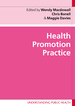
  • Health Promotion Practice
    ISBN: 0335218407 - By: MACDOWALL
    Edition: 01 - Pub Date: 01-NOV-06
    Price: $60 US
    - Format: Paperback
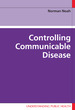
  • Controlling Communicable Disease
    ISBN: 033521844X - By: NOAH
    Edition: 01 - Pub Date: 01-JUN-06
    Price: $60 US
    - Format: Paperback
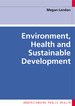
  • Environment, Health and Sustainable Development
    ISBN: 0335218415 - By: LANDON
    Edition: 01 - Pub Date: 01-MAR-06
    Price: $49 US
    - Format: Paperback
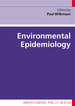
  • Environmental Epidemiology
    ISBN: 0335218423 - By: WILKINSON
    Edition: 01 - Pub Date: 01-MAR-06
    Price: $60 US
    - Format: Paperback
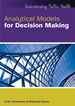
  • Analytical Models for Decision-Making with CD
    ISBN: 0335218458 - By: SANDERSON
    Edition: 01 - Pub Date: 01-MAR-06
    Price: $57.95 US
    - Format: Soft back with CD
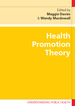
  • Health Promotion Theory
    ISBN: 0335218377 - By: DAVIES
    Edition: 01 - Pub Date: 01-DEC-05
    Price: $49 US
    - Format: Paperback
  • Managing Health Services
    ISBN: 0335218520 - By: GOODWIN
    Edition: 01 - Pub Date: 01-DEC-05
    Price: $60 US
    - Format: Paperback
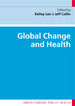
  • Global Change and Health
    ISBN: 0335218482 - By: LEE
    Edition: 01 - Pub Date: 01-NOV-05
    Price: $49 US
    - Format: Paperback
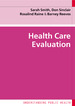
  • Health Care Evaluation
    ISBN: 0335218490 - By: SMITH
    Edition: 01 - Pub Date: 01-NOV-05
    Price: $60 US
    - Format: Paperback
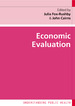
  • Economic Evaluation
    ISBN: 0335218474 - By: FOX-RUSHBY
    Edition: 01 - Pub Date: 01-NOV-05
    Price: $60 US
    - Format: Paperback
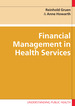
  • Financial Management in Health Services
    ISBN: 0335218512 - By: GRUEN
    Edition: 01 - Pub Date: 01-SEP-05
    Price: $60 US
    - Format: Paperback
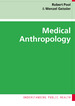
  • Medical Anthropology
    ISBN: 0335218504 - By: POOL
    Edition: 01 - Pub Date: 01-SEP-05
    Price: $49 US
    - Format: Paperback
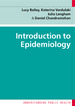
  • Introduction to Epidemiology
    ISBN: 0335218334 - By: BAILEY
    Edition: 01 - Pub Date: 01-SEP-05
    Price: $49 US
    - Format: Paperback
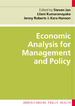
  • Economic Analysis for Management and Policy
    ISBN: 0335218466 - By: JAN
    Edition: 01 - Pub Date: 01-SEP-05
    Price: $55.95 US
    - Format: Paperback
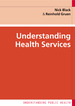
  • Understanding Health Services
    ISBN: 0335218385 - By: BLACK
    Edition: 01 - Pub Date: 01-AUG-05
    Price: $57.95 US
    - Format: Paperback
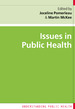
  • Issues in Public Health
    ISBN: 0335218369 - By: POMERLEAU
    Edition: 01 - Pub Date: 01-AUG-05
    Price: $60 US
    - Format: Paperback
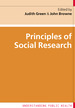
  • Principles of Social Research
    ISBN: 0335218350 - By: GREEN
    Edition: 01 - Pub Date: 01-AUG-05
    Price: $60 US
    - Format: Paperback
  • Introduction to Health Economics
    ISBN: 0335218342 - By: WONDERLING
    Edition: 01 - Pub Date: 01-AUG-05
    Price: $49 US
    - Format: Paperback
  • Making Health Policy
    ISBN: 0335218393 - By: BUSE
    Edition: 01 - Pub Date: 01-AUG-05
    Price: $49 US
    - Format: Paperback